
Women's fashion in India- how postcolonial identity and patriarchy is exploiting women's sexuality
Content guidance- this blog discusses rape myths and victim blaming in India as a result of Indian women being subject to a harsh patriarchal political system that uses postcolonial identity as an excuse for these acts.
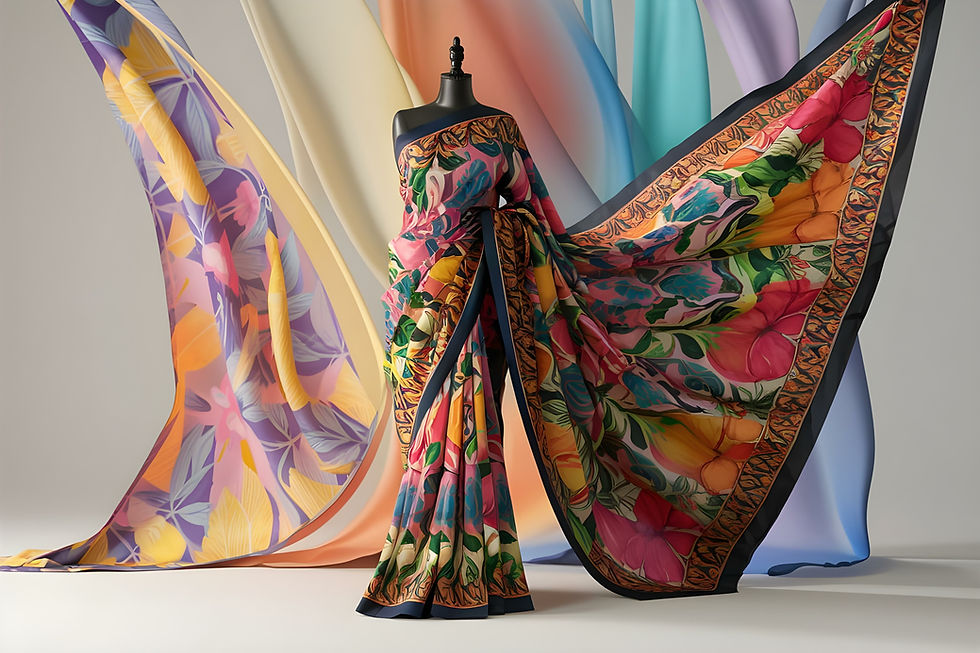
When beginning to apply Indian fashion to my research, it became a lot more complex when understanding Indian women’s fashion. This was because I discovered that far right male elites were using postcolonial anxiety as an excuse to create rape myths and encourage victim blaming in these cases.
As a result of reading an article by Lipi Begum and Ravinder Barn about rape myths and postcolonial middle-class India, I realised this complex understanding of patriarchy and postcolonial identity in India. The article addressed the context of modernisation and urbanisation in India which gave Indian women access to Westernised clothing such as bras and lingerie. This has encouraged rape myths as men use this wearing of ‘provocative’ clothing as an explanation for claiming these women as worthy of punishment or inviting themselves for the punishment of rape.
The authors explain this to a deeper level as they suggest that these male elites are lashing out against women being allowed in more public spaces and being given more rights since the pre-colonial, traditional Indian culture for women was to be in the domestic sphere. Since claiming independence in 1947, India has been using traditional dress to signify their resistance to Western domination. Therefore, the introduction of modern, Western clothing in women’s fashion caused postcolonial anxieties in India and introduced male elites to an excuse to blame for their misogyny.
The new Liberal Indian woman:
During the 1980s and 90s, women’s fashion in India became more fashionable and modern whilst still representing pre-colonial traditions. This was since India was experiencing economic liberalisation and globalisation. This is evident in modern Indian women’s fashion advertising as they strive to sell their traditional yet modern clothing. This has been an evidently successful adaptation for the Indian women’s apparel market since it became the sixth largest in the world in 2020. The new Liberal India woman represents resistance as she mimics Western styles and adapts them to reflect her own culture which symbolises power and freedom from colonial rule.
Despite this positive outlook on modernised yet traditional Indian women’s apparel; unfortunately, the patriarchy of India is restricting these women from expressing their sexuality by wearing lingerie with Western influences. Elites saw this as a threat to national identity which has resulted in the mistreatment and violence against middle-class women in India.
REFERENCES:
Begum, L & Barn, R (2019) 'Crossing Boundaries: Bras, Lingerie and Rape Myths in Postcolonial Urban Middle-Class India'. Gender, Place & Culture. 26 (10) 1324-1344. Available at: https://www-tandfonline-com.bathspa.idm.oclc.org/doi/pdf/10.1080/0966369X.2019.1567470 (Accessed: 20/1/2025).
Minhas, A (2023) Women's Apparel Market in India- Statistics & Facts. Available at: https://www.statista.com/topics/8268/women-s-apparel-in-india/#editorsPicks (Accessed: 21/1/2025).


Comments