
A brief history of handloom textiles and how India is reclaiming its national identity
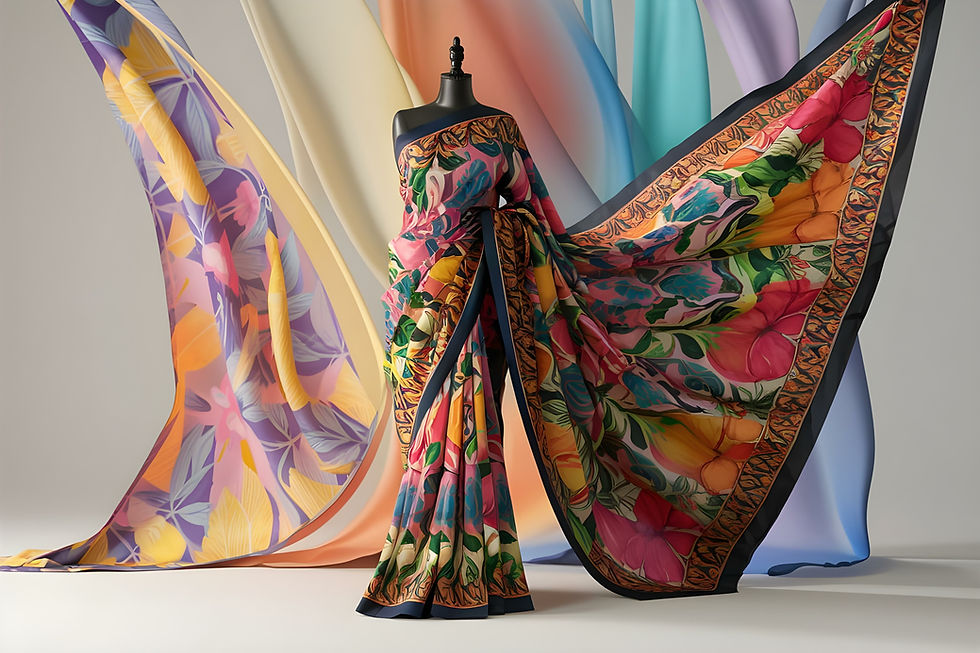
Handloom textiles is a pre-colonial tradition of Indian cultural identity that began in the ancient times. It is a handcrafted form of textiles that was very successful in India prior to colonisation which meant that, once colonised, imperial powers wanted to exploit this skill and use it for their own economic gain through trade.

My research revealed the history of handloom textiles and how colonisation impacted major changes in the industry and the way that independence enabled the reclamation of pre-colonial traditions and culture in India.
The British Empire exploited India’s craftsmanship to teach British locals the art of handloom textiles and they established a contract which forced Indian weavers to sell their textiles exclusively to Britain. They also claimed traditional Indian cultural patterns as their own such as Chintz (natural, floral pattern work) which signifies the domination of Western powers over the colonised. The production of Indian textiles declined from 25% to 2% by the time India claimed independence which reveals the extent to which colonial powers diminished the success of the handloom industry.
The success of Indian handloom textiles continued to decline and be exploited by the British Empire with developments in modernisation. This enabled technological advancements in the British Empire and mass production of textiles with new machinery which drastically lessened the need for handloom textiles.
However, the world war and Indian independence in 1947 negatively impacted the British textiles industry as India was recognised for its weavers and patterns. Handloom textiles became an influential art form once again and symbolised the postcolonial identity and resistance to Westernisation from Indian textiles and culture.


Comments